Frameless vs Framed Cabinets: Complete Comparison Guide
 By YuDezign Team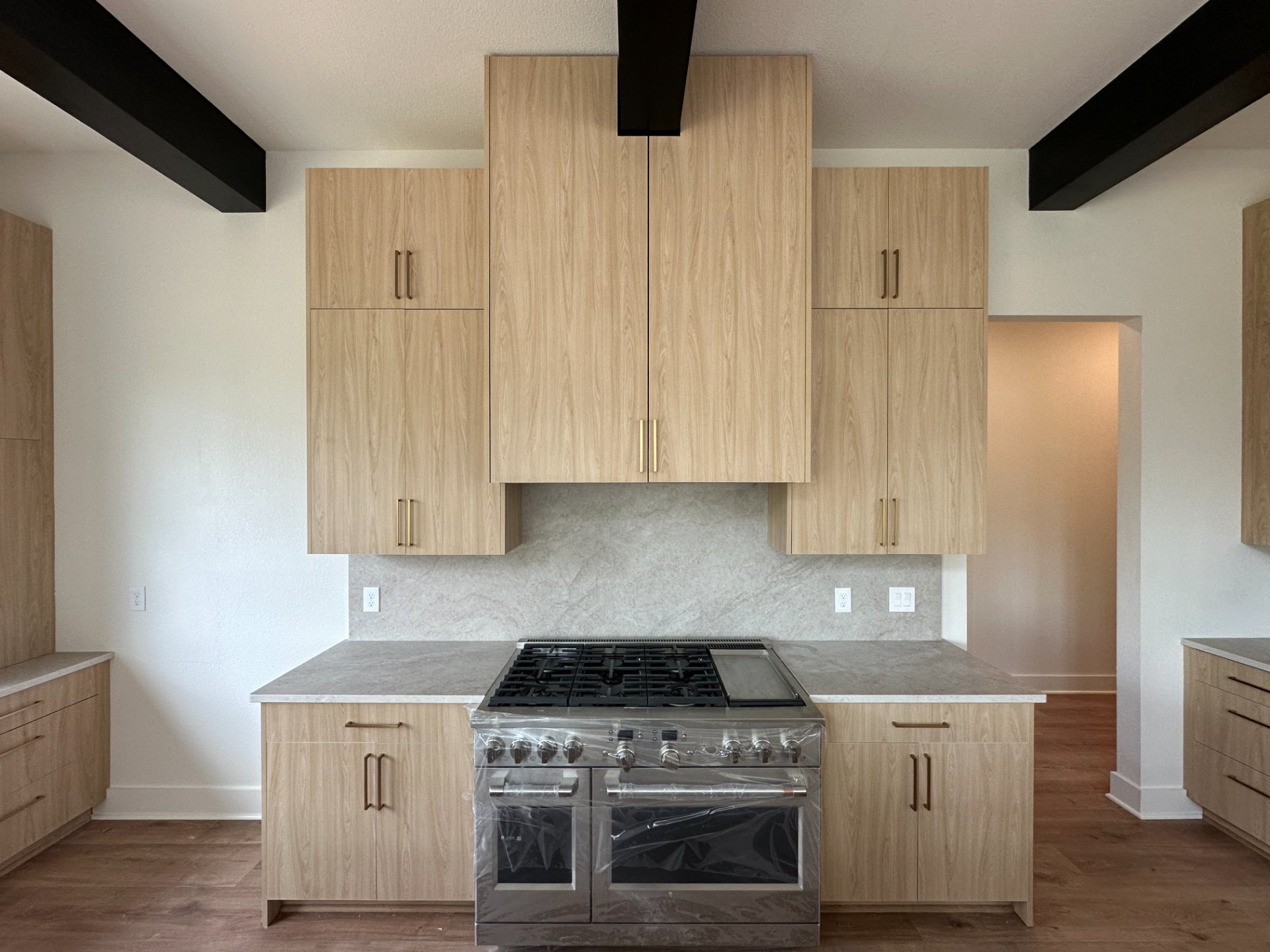
Choosing between frameless and framed cabinets is one of the most important decisions in your kitchen remodel. This construction difference affects storage capacity, aesthetics, durability, and cost. In this comprehensive guide, we'll compare both styles to help you make the right choice for your Houston home.
Quick Answer
Frameless cabinets (European style) offer 10-15% more storage space, sleek modern aesthetics, and easier access. Framed cabinets (American style) provide traditional styling, stronger construction for very heavy doors, and easier installation. For Houston homes, frameless cabinets are increasingly popular due to superior storage efficiency and moisture resistance.
Understanding the Construction Difference
The fundamental difference between frameless and framed cabinets lies in how the cabinet box is constructed:
Frameless Construction
Frameless cabinets (also called European-style or full-access) have no face frame. Doors attach directly to the cabinet box sides using hidden hinges.
- Box made from thicker panels (3/4")
- Doors cover entire opening
- European-style concealed hinges
- Clean, contemporary appearance
Framed Construction
Framed cabinets (American-style or face-frame) have a 1.5" wood frame attached to the front of the box. Doors mount to this frame.
- Face frame adds structural strength
- Partial or full overlay doors
- Exposed hinges or partial concealment
- Traditional, classic look
Storage Space Comparison
One of the most significant practical differences is storage capacity. The face frame on framed cabinets reduces the opening size by approximately 1.5" on each side.
| Measurement | Frameless | Framed | Difference |
|---|---|---|---|
| 24" Base Cabinet Opening | ~23" usable width | ~20" usable width | 3" wider access |
| Drawer Width (24" cabinet) | 22.5" wide drawers | 19.5" wide drawers | 15% more capacity |
| Door Clearance | Full-width access | Frame blocks 1.5" each side | Easier reach-in |
| 10' Kitchen Storage Gain | Baseline | 10-15% less total | ~3-5 cu ft more |
Storage Efficiency: In a typical 10×12 kitchen, frameless cabinets provide approximately 3-5 cubic feet more usable storage space than framed cabinets. This is equivalent to adding an extra base cabinet without using additional floor space—crucial in Houston kitchens where maximizing storage is priority.
Detailed Comparison: Frameless vs Framed
1. Aesthetics & Style
Frameless Cabinets:
- Clean, seamless appearance with minimal visible gaps between doors
- Modern, contemporary, and minimalist aesthetic
- Doors sit flush with cabinet box creating sleek lines
- Better suited for slab doors, high-gloss finishes, and handleless designs
- Popular in modern Houston kitchen designs
Framed Cabinets:
- Traditional appearance with visible frame between doors
- Classic American style found in Shaker, raised panel, and inset designs
- Frame creates visual separation between cabinet boxes
- Better suited for traditional, farmhouse, and transitional styles
- Reveals more wood grain and detail work
2. Durability & Construction Quality
Frameless Cabinets:
- Require thicker cabinet boxes (3/4" vs 1/2" on framed) for structural integrity—actually more material in construction
- Fully captured hinges distribute weight across entire box side, reducing stress points
- Better suited to plywood construction which resists moisture—ideal for Houston's 75-90% humidity
- No face frame means no joints to loosen over time from humidity expansion/contraction
- European hinges are adjustable in 3 dimensions—easier to maintain perfect alignment over years
Framed Cabinets:
- Face frame adds structural reinforcement—excellent for supporting very heavy solid wood doors
- Frame can use thinner box material (1/2") since frame provides strength
- Traditional joinery techniques (mortise-tenon, dowels) are time-tested
- Face frame can hide minor imperfections in box construction or wall irregularities
- May experience frame joint separation in extreme humidity fluctuations
Houston Climate Consideration: Both styles perform well if built with moisture-resistant materials. However, frameless cabinets' monolithic construction (fewer joints) and requirement for thicker plywood panels make them slightly more resistant to Houston's humidity-driven expansion and contraction cycles.
3. Hardware & Hinge Options
Frameless Cabinets:
- Use European-style concealed hinges (cup hinges) exclusively
- Hinges are completely hidden when door is closed—cleaner look
- 6-way adjustability: up/down, left/right, in/out—easy to fine-tune alignment
- Soft-close mechanism integrates seamlessly with most European hinges
- Can achieve handleless "push-to-open" designs with mechanical latches
- Hinge cost: $15-$30 per hinge for quality soft-close models
Framed Cabinets:
- Can use exposed traditional hinges (butt hinges) or semi-concealed hinges
- Exposed hinges show decorative hardware—bronze, oil-rubbed, polished finishes
- Limited adjustability compared to European hinges
- Soft-close can be added but requires additional mounting hardware
- Inset doors require precision hinges and perfect door fitting
- Hinge cost: $5-$20 for basic, $20-$40 for quality concealed soft-close
4. Installation Complexity
Frameless Cabinets:
- Require more precise installation—cabinet boxes must be perfectly level and plumb
- Less forgiving of wall irregularities; may require more shimming
- Door alignment is critical since there's no frame to hide gaps
- Once installed, European hinges make fine-tuning easy
- Installation time: Medium to difficult (skilled installer recommended)
Framed Cabinets:
- More forgiving installation—face frame hides minor imperfections
- Easier to scribe and fit to uneven walls
- Face frames can be caulked and painted to blend with walls
- Traditional favorite of many installers due to familiarity
- Installation time: Easier (wider skill range can install successfully)
5. Cost Comparison
Pricing varies based on materials and manufacturer. The figures below are typical installed market rates in Houston — they include installation labour and the trades that go with a cabinet job. They are not our prices: YuDezign is supply-only, so we manufacture and deliver the cabinets and you or your contractor install them. Our frameless kitchens run roughly $215–$375 per linear foot supply-only.
Semi-Custom Frameless
3/4" plywood boxes, melamine/laminate finish
Semi-Custom Framed
Hardwood frame, plywood or MDF boxes
Custom Frameless (High-Gloss)
Premium acrylic or lacquer finish
Custom Framed (Inset)
Full inset doors, custom hardwood
Cost factors:
- Frameless cabinets typically cost 10-20% more than equivalent framed cabinets due to thicker materials and European hardware
- However, frameless cabinets provide 10-15% more storage, effectively reducing cost per cubic foot of storage
- Premium frameless finishes (high-gloss acrylic) command top prices but are extremely durable
- Custom framed inset cabinets are most expensive due to precision craftsmanship required
For detailed pricing information, see our 2025 Custom Cabinet Cost Guide.
Which Style is Right for You?
Choose Frameless If You Want:
- Maximum storage capacity in limited space
- Modern, contemporary, or minimalist aesthetics
- Sleek high-gloss or handleless designs
- Easy-access, full-width cabinet openings
- Concealed hinges and clean lines
- Maximum humidity resistance (Houston climate)
Choose Framed If You Want:
- Traditional, classic, or farmhouse styling
- Visible decorative hinges and hardware
- Easier installation and wall fitting
- Shaker, raised panel, or inset door styles
- Slightly lower upfront material cost
- Match existing traditional home architecture
Houston Market Trends
In the Houston custom cabinet market, we're seeing a clear shift toward frameless construction:
- New construction homes: 65-70% of new Houston homes built in 2024-2025 specify frameless cabinets, particularly in modern and contemporary designs
- Luxury remodels: High-end kitchen renovations in Memorial, River Oaks, and The Woodlands overwhelmingly choose frameless for storage efficiency and clean aesthetics
- Young homeowners: Millennials and Gen-Z buyers strongly prefer frameless cabinets' modern appearance and maximized storage
- Traditional styles persist: Framed cabinets remain popular in historic neighborhoods, farmhouse-style homes, and among buyers seeking classic American aesthetics
Learn more about current design preferences in our article on Best Kitchen Cabinet Trends for Houston Homes 2025.
Can You Mix Frameless and Framed?
While it's technically possible to combine both styles, we do not recommend mixing frameless and framed cabinets in the same kitchen. Here's why:
Problems with Mixing Styles
- •Visual inconsistency—door reveals and gaps appear different throughout kitchen
- •Incompatible hardware—European hinges don't match traditional hinges aesthetically
- •Different door overlay specifications create alignment issues
- •Difficult to maintain consistent finish across different construction methods
- •Complicates future repairs or additions—need to stock two hinge systems
Better approach: Choose one construction style and achieve variety through door styles, finishes, and colors. You can use different door profiles (slab vs. shaker) or mix painted and stained finishes while maintaining consistent construction method.
Maintenance & Longevity
Frameless Cabinet Maintenance
- Hinge adjustment: European hinges should be checked and adjusted annually. Easy 3-way adjustment with screwdriver maintains perfect door alignment.
- Cleaning: Wipe down smooth surfaces with damp microfiber cloth. High-gloss finishes show fingerprints but clean easily with glass cleaner.
- Expected lifespan: 20-25+ years with proper care. Plywood boxes resist moisture damage extremely well in Houston climate.
- Hinge replacement: European hinges are standardized—easy to replace if needed ($15-$30 each).
Framed Cabinet Maintenance
- Frame joints: Inspect annually for separation or gaps. Touch up with wood glue if joints loosen from humidity cycling.
- Hinge tightening: Traditional hinges may require periodic screw tightening, especially on heavy doors.
- Cleaning: Pay attention to crevices between frame and doors where dust accumulates. Use soft brush for detailed areas.
- Expected lifespan: 15-20 years. Face frame joints can degrade in high humidity if not properly sealed.
- Refinishing: Wood frames can be sanded and refinished if finish wears—advantage over laminate surfaces.
Environmental Considerations
Both construction styles can be environmentally responsible depending on materials:
- Frameless advantages: Often uses engineered wood products (plywood, MDF) made from sustainable sources. Less hardwood consumption than framed cabinets with solid wood frames.
- Framed advantages: When built with domestic hardwoods (oak, maple, cherry), supports North American forestry. Frames can be made from reclaimed or FSC-certified lumber.
- Best practices for both: Choose formaldehyde-free boxes, low-VOC finishes, and local manufacturing to reduce transportation emissions. Houston-made cabinets have smaller carbon footprint.
Resale Value Impact
How do frameless vs. framed cabinets affect your home's resale value?
Resale Considerations
- Modern homes: Frameless cabinets add more value in contemporary and mid-century modern homes. Buyers expect sleek, efficient storage.
- Traditional homes: Framed cabinets may appraise higher in historic or traditional-style homes where they match architectural character.
- Quality matters most: Both styles return 60-80% of investment in Houston market. Quality of materials and finish matters more than construction style.
- Storage efficiency sells: The extra storage capacity of frameless cabinets is a strong selling point that appeals to most buyers.
Frequently Asked Questions
Are frameless cabinets more expensive than framed?
Which style is better for Houston's humid climate?
Do frameless cabinets really provide more storage?
Can I get a traditional Shaker style in frameless construction?
Are frameless cabinets harder to install?
Which style is more popular in Houston right now?
Making Your Decision
The choice between frameless and framed cabinets ultimately depends on your priorities:
Choose frameless cabinets if: You value maximum storage efficiency, prefer modern aesthetics, want concealed hinges, and plan to keep cabinets long-term. The higher upfront cost is offset by superior storage capacity and longevity in Houston's climate.
Choose framed cabinets if: You prefer traditional styling, want decorative exposed hardware, have a tighter budget, or are matching existing traditional home architecture.
Both styles can deliver excellent quality and performance when properly manufactured with appropriate materials. The key is working with a knowledgeable cabinet supplier who understands Houston's unique climate requirements and can guide you toward the best construction method for your specific needs.
See Both Styles in Our Houston Showroom
Compare frameless and framed cabinets side-by-side with expert guidance
Final Thoughts
The frameless vs. framed debate isn't about which is objectively "better"—both construction methods have served homeowners well for decades. Frameless cabinets excel at storage efficiency and modern aesthetics, while framed cabinets offer traditional styling and easier installation.
In Houston's market, we're seeing strong growth in frameless adoption due to storage optimization and superior moisture resistance. However, your choice should align with your home's architectural style, personal aesthetic preferences, and functional requirements.
Visit our showroom to see both styles in person, open the doors, test the hardware, and experience the storage differences firsthand. There's no substitute for hands-on comparison when making this important decision for your kitchen remodel.